itide

A research platform for studying animal tracks.

Design studies, annotate track evidence, and produce reproducible datasets across imagery sources.

Sign in with Google (authorized accounts only)
What it is

itide.ai is a workspace for investigators and research teams to document, label, and compare animal track evidence at scale. The emphasis is on methodological clarity, consistent annotation, and exportable results that hold up to scrutiny.

Research workflow (end-to-end)

  1. Define the study — set objectives, scope, and inclusion criteria.
  2. Organize imagery — group photosets and surveys; record acquisition context.
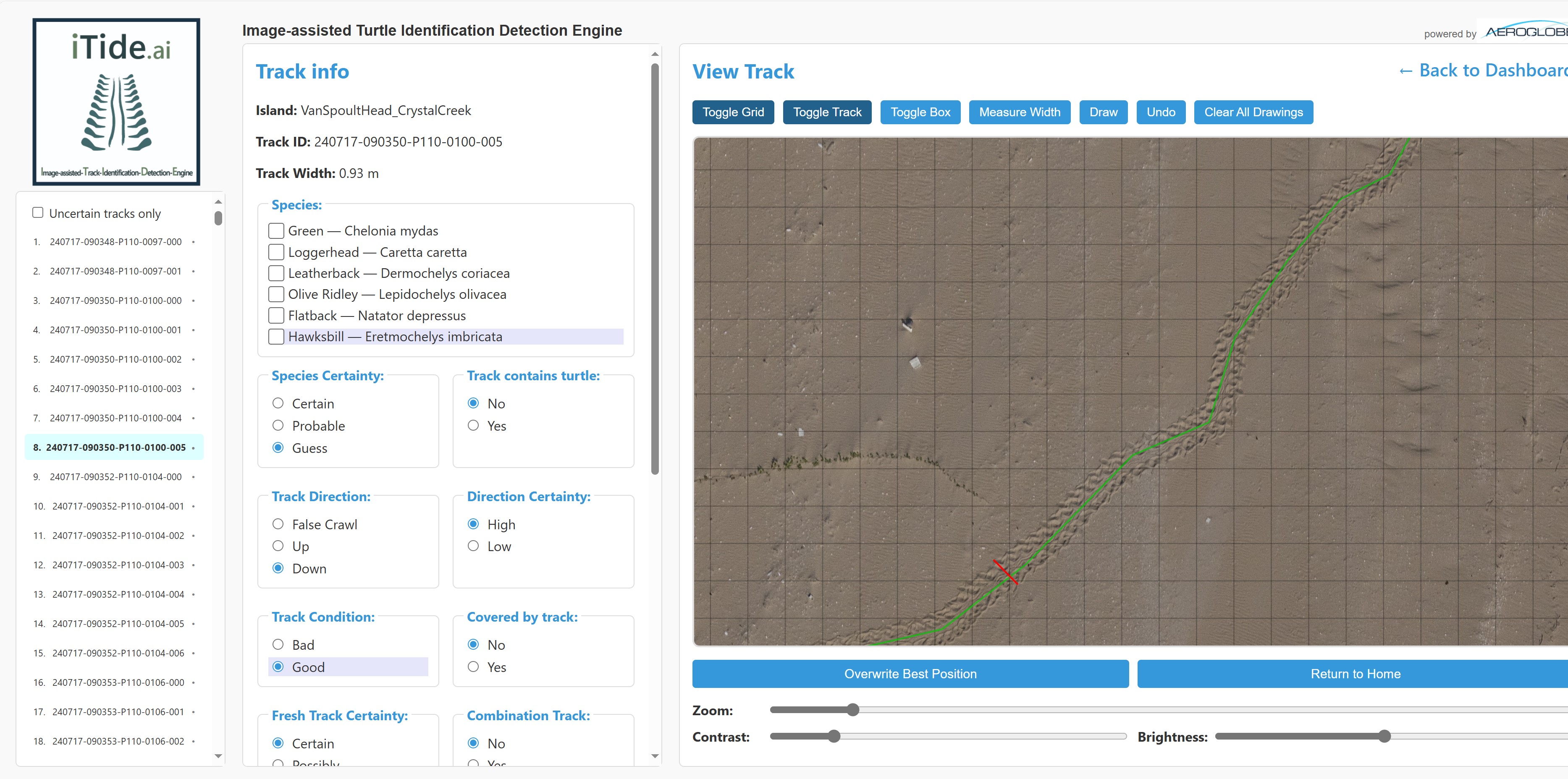
  3. Annotate tracks — mark occurrences and record structured attributes (taxonomy, context, uncertainty).
  4. Review & verify — second-pass checks before inclusion in the dataset.
  5. Version & export — freeze a dataset snapshot for analysis or archiving.

Examples of attributes: species/hypothesis, substrate, trackway notes, environmental context, confidence level. Use your own schema where needed.

Why this approach

  • Reproducibility — every record carries enough context to be re-evaluated.
  • Comparability — consistent fields enable cross-site and cross-study synthesis.
  • Transparency — clear provenance and review history for each annotation.
  • Scalability — designed to handle repeated surveys and long-running programs.

Typical applications

  • Presence/absence and occupancy studies
  • Corridor and trail use assessments
  • Human–wildlife interface monitoring
  • Education and method training
  • Baseline documentation for conservation actions

Data stewardship

Sensitive locations and species require care. Use your project's protocols for coordinate handling, access control, and retention. Keep location precision appropriate to the study and risk level.

AI for track identification

itide.ai applies machine learning to assist researchers during annotation and to improve models using reviewed field evidence. Assistance is optional and review-centric: suggestions never overwrite human labels, and uncertainty remains visible.

How assistance works

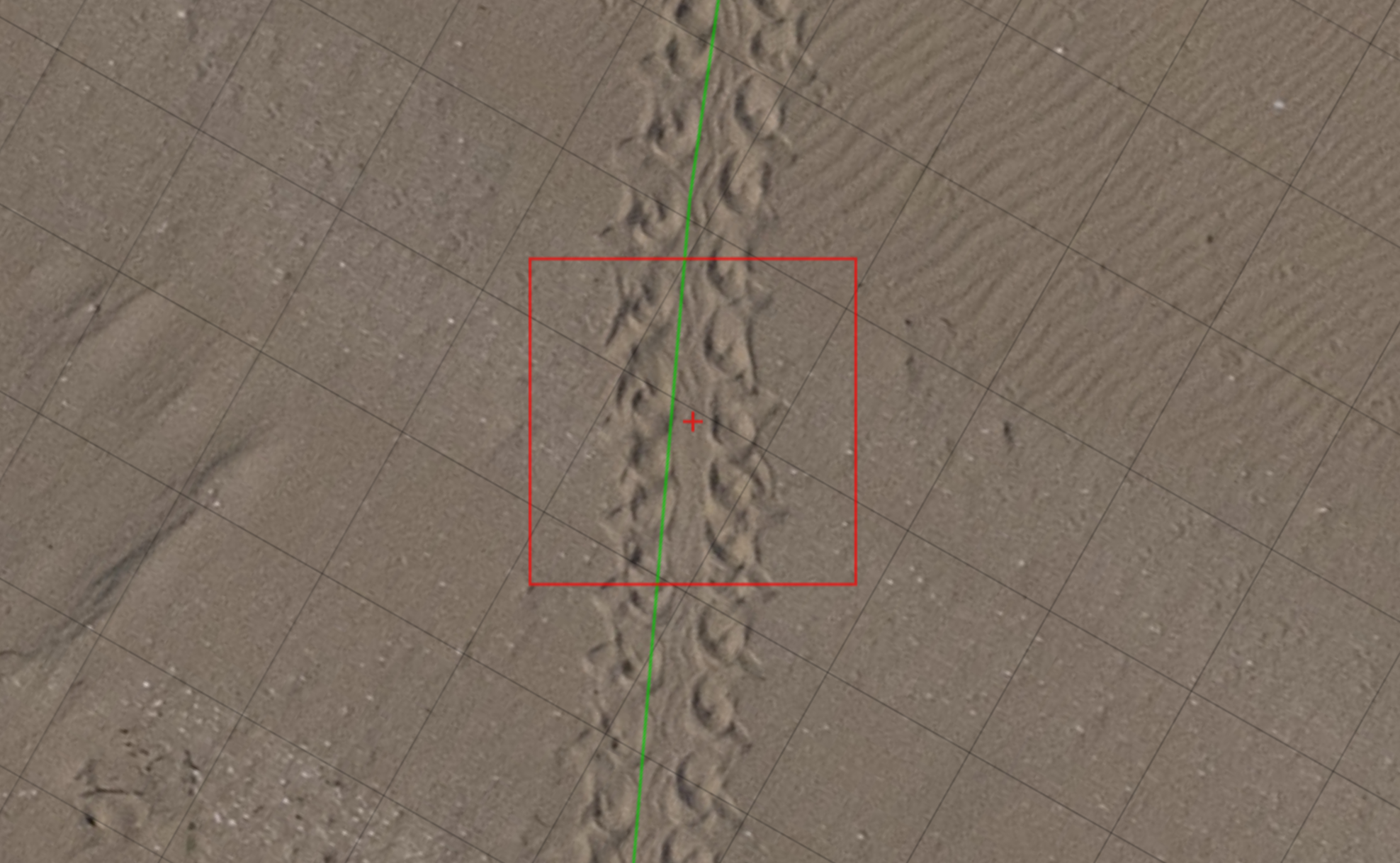
  1. Candidate proposals - the model highlights potential tracks or taxa in imagery.
  2. Human-in-the-loop review - investigators confirm, correct, or reject proposals and record confidence.
  3. Structured attributes - determinations include taxonomy/hypothesis, substrate, context, and notes.
  4. Transparent uncertainty - model scores and reviewer confidence are retained with each record.

Training better models from practice

  • Reviewed examples - accepted/rejected suggestions and corrected labels become high-quality training data.
  • Hard negatives and edge cases - ambiguous or rejected candidates improve robustness.
  • Versioned datasets - teams can freeze snapshots for reproducible training and evaluation.
  • Opt-in governance - projects choose whether reviewed data may be used for model improvement.

Assistance respects study design and sensitive data. Use your project's protocols for sharing and coordinate handling; participation in model improvement is opt-in.

Mission

Purpose

Advance the study of animal tracks by making high-quality, well-documented, and reusable datasets the default outcome of field and imaging work.

Principles

  • Method first — tools should reflect the study design, not the other way around.
  • Evidence you can revisit — every annotation is reviewable and citable within your team.
  • Clarity over convenience — simple, explicit fields beat opaque automation.
  • Responsible handling — track data can be sensitive; protect subjects and sites.

What success looks like

  • Datasets that a second team can re-run and reach the same conclusions.
  • Clear uncertainty reporting alongside determinations.
  • Faster, cleaner handoffs to analysis without reformatting.

Get in touch

When to contact us

  • Access requests — need approval for your Google account or project space.
  • Support — questions about workflow setup or exports.
  • Collaboration — proposing methods, schemas, or training materials.
  • Responsible disclosure — concerns about sensitive data or misuse.

We'll respond via email. If the matter is time-critical, note that in the subject line.

Sign in to itide.ai

Authentication uses Google Sign-In (OAuth 2.0). Access is restricted to authorized Google accounts associated with active research spaces.

  • Use the Google account that was approved for your project.
  • If you need access, submit a request with your Google email and project details.
  • If sign-in fails, confirm you're logged into the correct Google account in your browser.

Google handles authentication; your Google password is not shared with itide.ai.